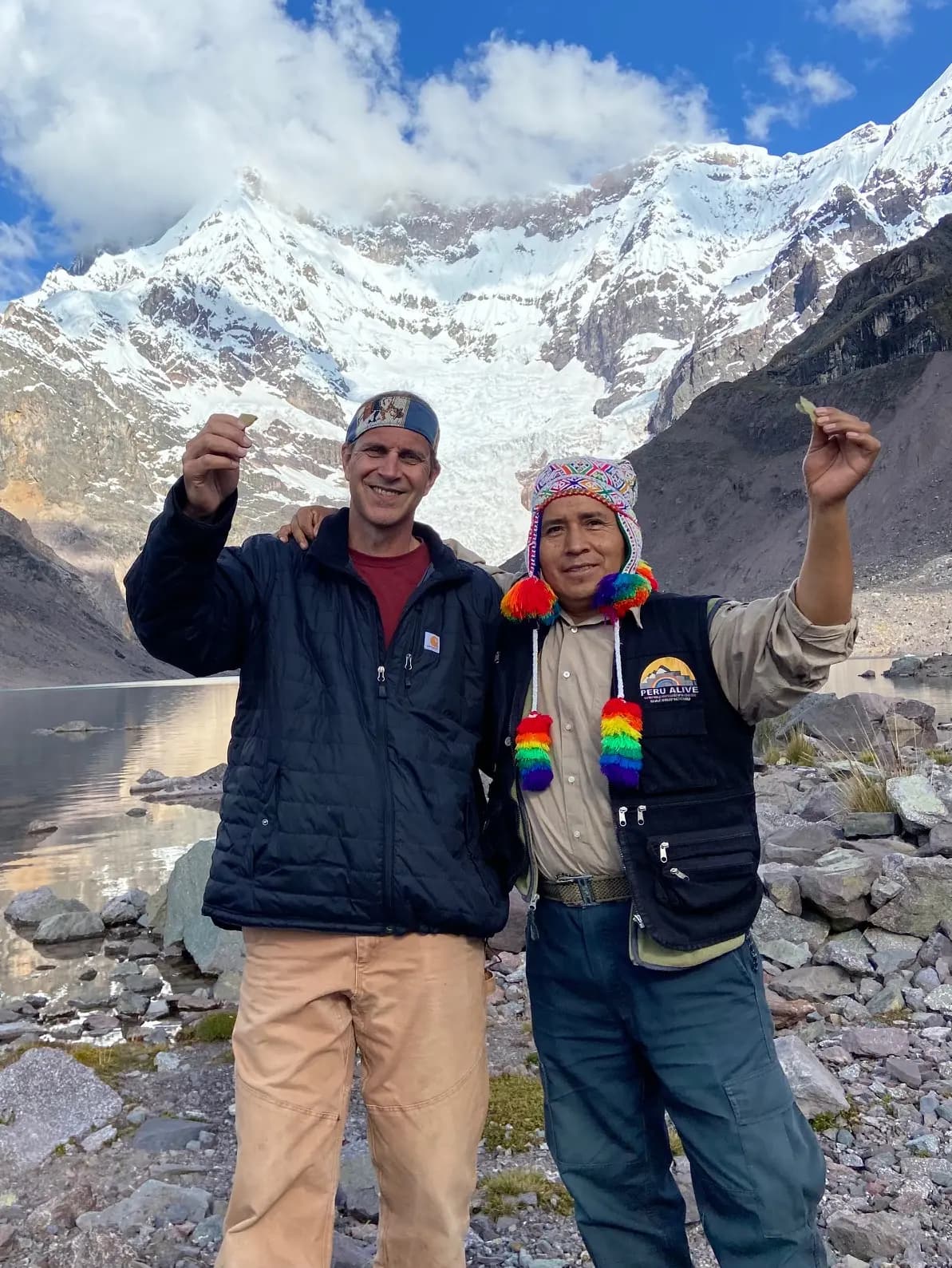
Who we are
Three days of trust became more than twenty years of relationship.
Roam Alive traces its operating philosophy to a friendship that began on the Inca Trail in 2002 and kept growing through family, work, spirituality, travel, and reciprocal responsibility.
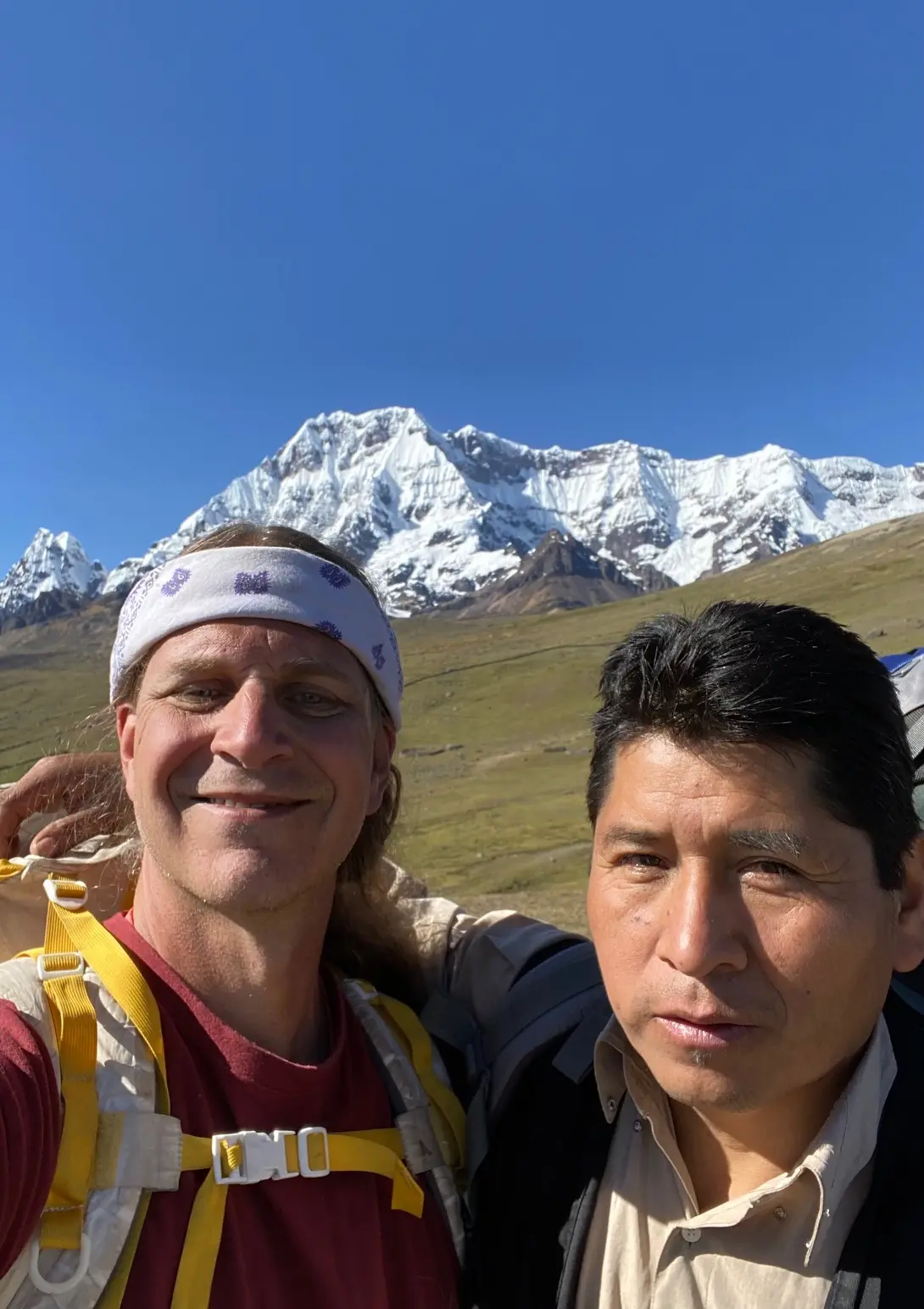
Peru · 2002
It began with a trip Mick almost did not take.
Mick had just completed his master's program and planned a short break before entering the workforce. He hoped to ski in Chile, discovered his airline miles would only get him to Peru, and decided to trek instead. A week before departure, a close relative was diagnosed with cancer and needed chemotherapy. Mick considered canceling. His family encouraged him to go.
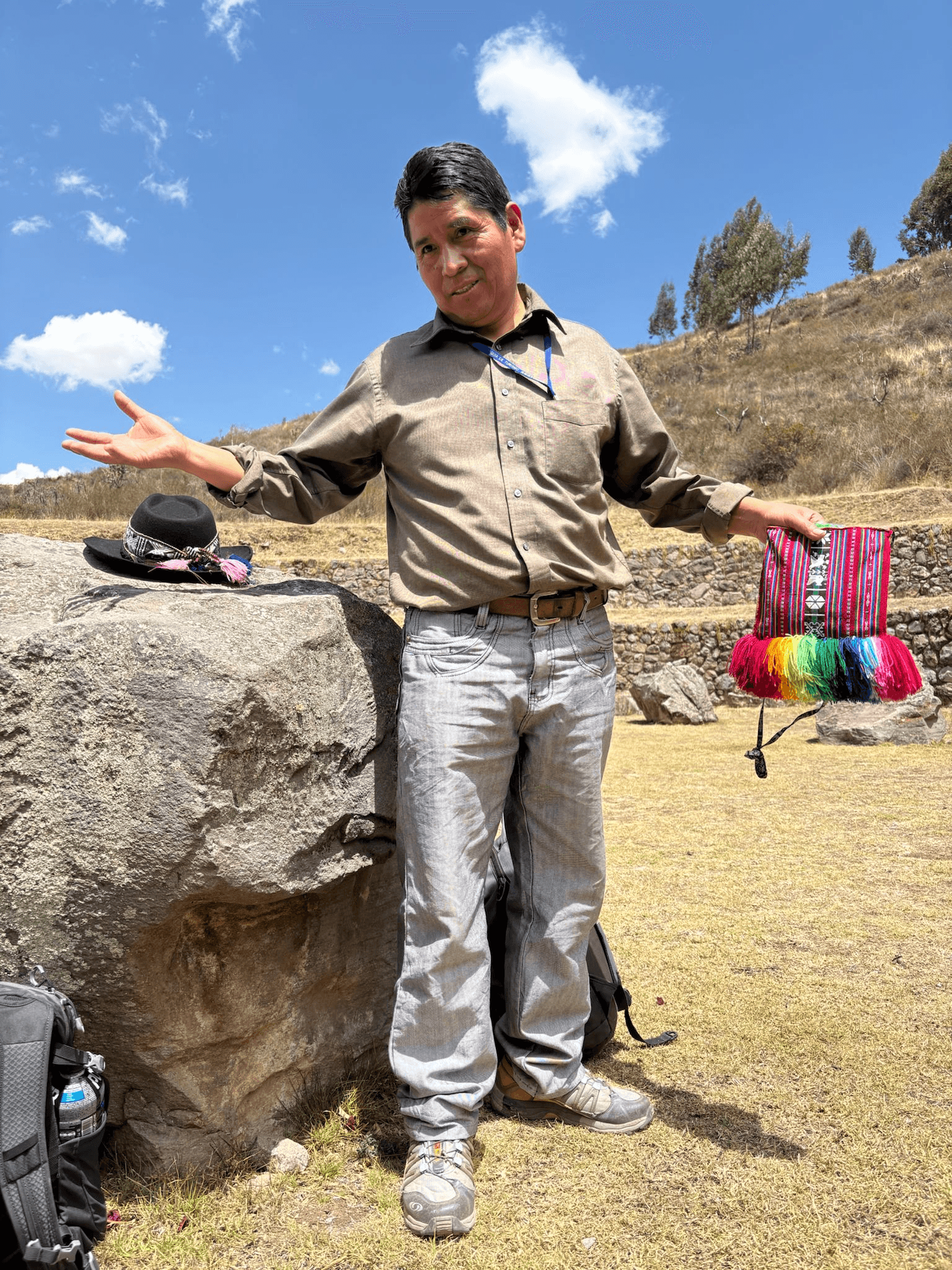
In Cusco, with little preparation, he walked into a tour office and booked a three-day Inca Trail trek. The lead guide was Wilbert Yucra. On the first night, after the group settled in, Mick told Wilbert about the guilt he felt being away while someone he loved was sick.
Wilbert responded by sharing Andean and Quechua beliefs that might help Mick make sense of what his family was facing. Their nightly conversations became an exchange. Mick shared related teachings he had encountered in Native community life in Montana. The itinerary became secondary to the relationship forming inside it.
The leap of faith
A relationship became an operating model.
Before leaving Peru, Mick raised the idea of returning with high-school students from Montana. He and Wilbert spent the next month planning a summer program based from Wilbert's home in Urubamba. Then came the moment that tested the relationship: Mick needed to send Wilbert a large amount of money to prepare for the group. They had known one another in person for three days.
Mick sent it. The program happened. Teen trips continued for years, then expanded to university students, families, private groups, mountain excursions, and spiritual workshops. Their children grew up knowing one another. Wilbert's extended family became part of the experience, and Mick was eventually asked to become padrino to Wilbert's nieces Guadalupe and Blanca.
As Wilbert continued operating in Peru, Mick built relationships in other countries using the same principle: find people you trust, learn how a place understands itself, and build the journey around the relationship rather than forcing the relationship around a prewritten itinerary.
Ayni · reciprocity
Give and receive. Leave the relationship stronger.
Wilbert introduced Mick to Ayni, commonly understood as reciprocity and mutual exchange. Roam Alive does not claim ownership of that Quechua tradition. It carries forward a practical lesson from it: travel creates obligations between people, and a good journey should strengthen the relationships that made it possible.
Relationships before transactions
Hosts, guides, families, and communities are people in relationship with Roam Alive, not scenery around an itinerary.
Keep value connected
Where possible, economic value stays close to the people and communities creating the experience.
Ask before promising
Ceremonies, stories, cultural access, and community participation are defined with local partners before Roam Alive offers them.
Return connected
The best outcome is a set of names, relationships, memories, and questions that continue after the traveler goes home.
The question we ask travelers
Ask why it makes sense here.
We all carry habits from home and can mistake them for universal rules. Roam Alive asks travelers to notice that reflex. Curiosity creates space to understand why a custom, belief, rhythm, or social norm exists before judging it through the standards of somewhere else.
The mission
Travel should deepen the relationship between visitor and host.
Roam Alive creates culturally sensitive journeys that help travelers understand another way of living while seeing their own assumptions more clearly. The goal is a reciprocal experience that can continue to matter after everyone goes home.