Roam Alive Journal · Santiago de Compostela
Why Are You Walking?
Ten days on the Portuguese Camino, Porto to Santiago de Compostela, and the question strangers ask each other on the first morning.
On another trek, I might ask a fellow walker about the weather, the gear, the blisters. On the Camino de Santiago it is often the first question, asked before names: why are you walking? Any answer is acceptable. Almost nobody answers with the scenery.
I walked the Portuguese Camino in September 2026, from Porto to Santiago de Compostela, while I was developing the Grief Walk, a Roam Alive journey for people carrying loss. I sent a few lines home as I went. This journal follows them in the order I wrote them.
The route at a glance
I walked the Camino Portugués from Porto to Santiago de Compostela between September 4 and 13, 2026, taking the Spiritual Variant from Pontevedra: about 240 km on foot and 31 km by boat. The distances below follow the mapped trail between the places I wrote from, so some are more than one day's walk.
- Porto to Barcelos: 53.9 km
- Barcelos to Ponte de Lima: 31.4 km
- Ponte de Lima to Rubiães: 16.2 km, over the highest point of the route
- Rubiães to Tui: 20.2 km, crossing the Minho from Portugal into Spain
- Tui to Redondela: 31.8 km
- Redondela to Arcade: 7.3 km
- Arcade to Pontevedra: 11.5 km
- Pontevedra to Armenteira, by Poio: 19.8 km, the start of the Spiritual Variant
- Armenteira to Vilanova de Arousa: 22.1 km, down the Stone and Water Route
- Vilanova de Arousa to Pontecesures: 30.8 km by boat, up the Ría de Arousa and the Ulla
- Pontecesures to Padrón: 2.4 km
- Padrón to Santiago de Compostela: 23.4 km
Porto
Lisbon and Porto ·
The Camino Central runs south to north through Portugal. Many pilgrims choose to start in Porto, 256 km from Santiago. It was where I began my walk.
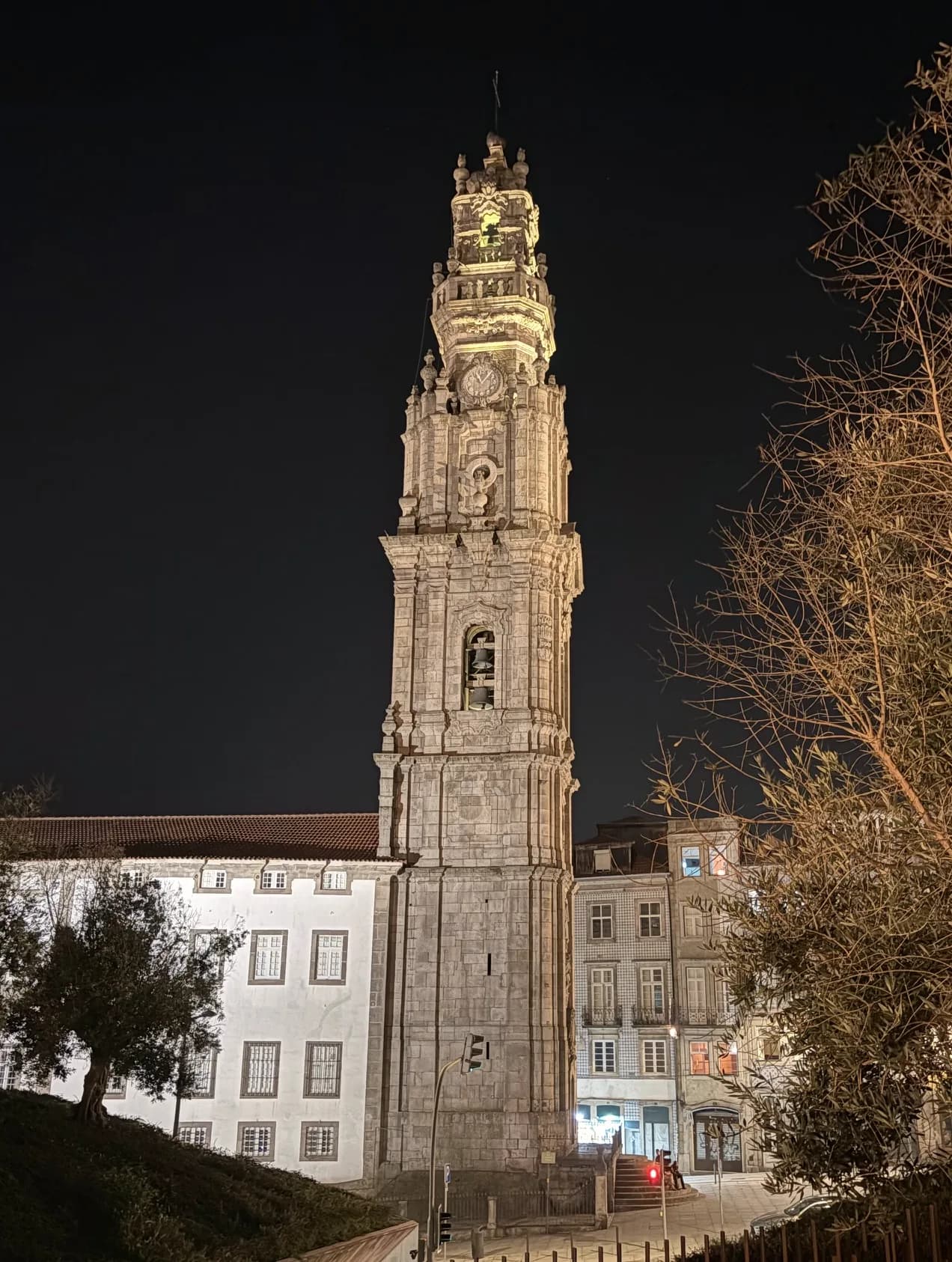
The Camino Central runs south to north through Portugal. Many pilgrims choose to start in Porto, 256 km from Santiago. Once I left the city behind, the path roamed through quiet villages and farmland. Along the way are guesthouses and the albergues de peregrinos, monasteries and churches converted into dormitories for pilgrims only. To sleep in one I carried a credential, an accordion-folded booklet that collected a stamp from each place I passed. It is a passport for a country that only exists on foot. On the first morning mine was almost empty.
Barcelos
Barcelos ·
I could hardly get lost on the Camino. At every turn there is a yellow arrow, and beside it a scallop shell whose grooves stand for the trails that start all over the Iberian Peninsula and run together in one place: Santiago de Compostela. The way is marked so completely that, after the first day, my attention was free for something else.
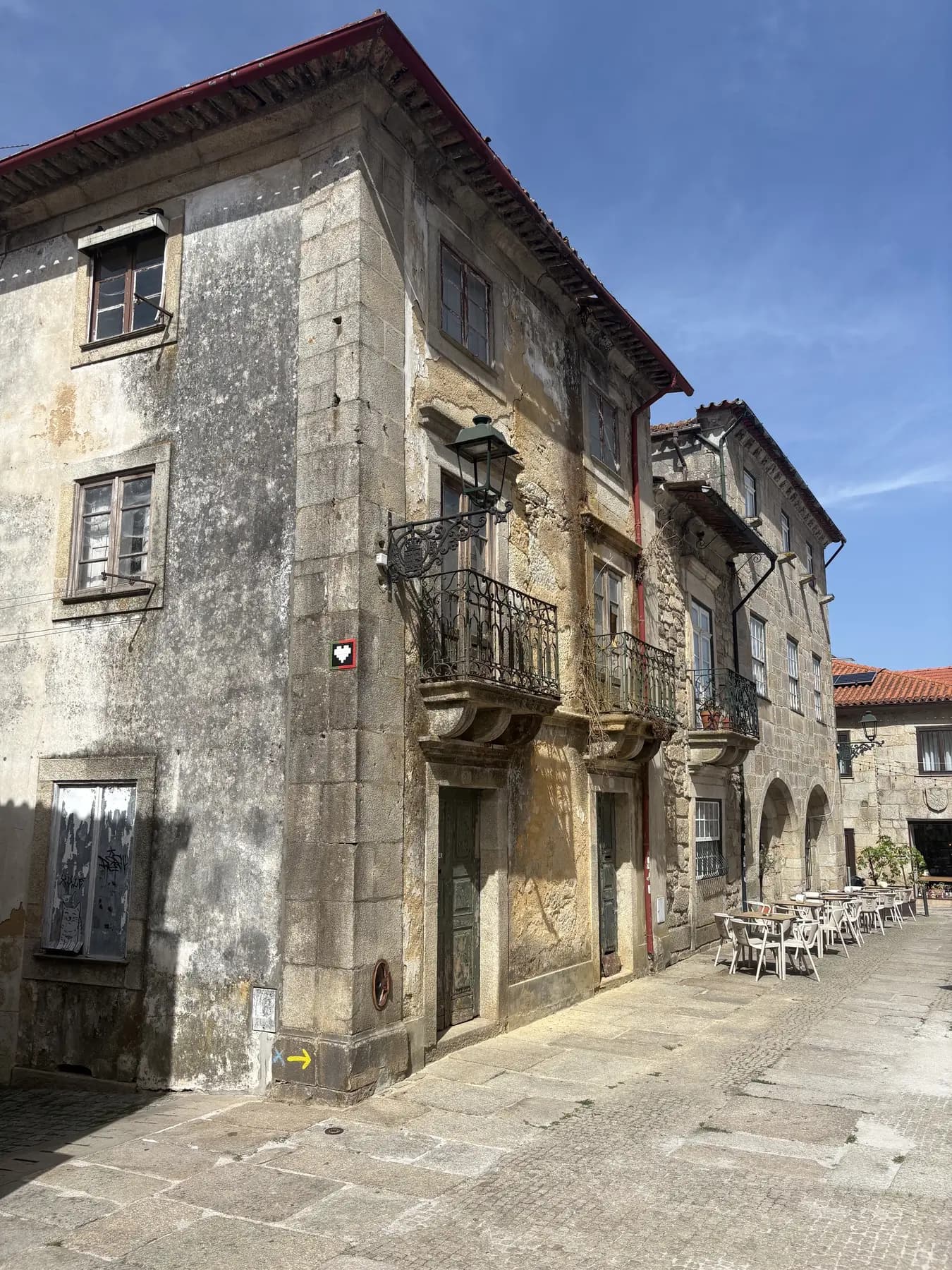
In Barcelos I walked with a couple in their later years who had both retired on a Friday and started the Camino on the Monday. They had given their whole lives to their careers, and by their own account the careers had worked: a home, a son raised and put through university. Five years ago she was diagnosed with a life-threatening cancer. They went through the treatments together, chemotherapy, radiation, operations, and kept working full time whenever her body allowed. The day she rang the bell with a clean bill of health, they decided to quit and never waste another moment of this precious life.
When I told them about the Grief Walk, they both started to weep.
We know how blessed we are. We learned how precious life is. But, we never expected the wave of intense emotions we are both feeling from leaving our 30 plus years careers. We were walking today and felt like we were in grief. We are excited for the life ahead of us but are sadder and more mixed to let go of something that has been so permanent in our lives. I think it's fair to say we are grieving.
Nobody had died. They were grieving a life that had gone well, and the end of an identity they had lived inside for thirty years. Grief, it turns out, does not wait for a funeral. It comes whenever something permanent ends, even when the ending is chosen.
Ponte de Lima
Ponte de Lima ·
Ponte de Lima is named for its long stone bridge over the River Lima, and the way into town runs beneath an avenue of plane trees tall enough to close over the path. It was here that I started paying attention to the question.
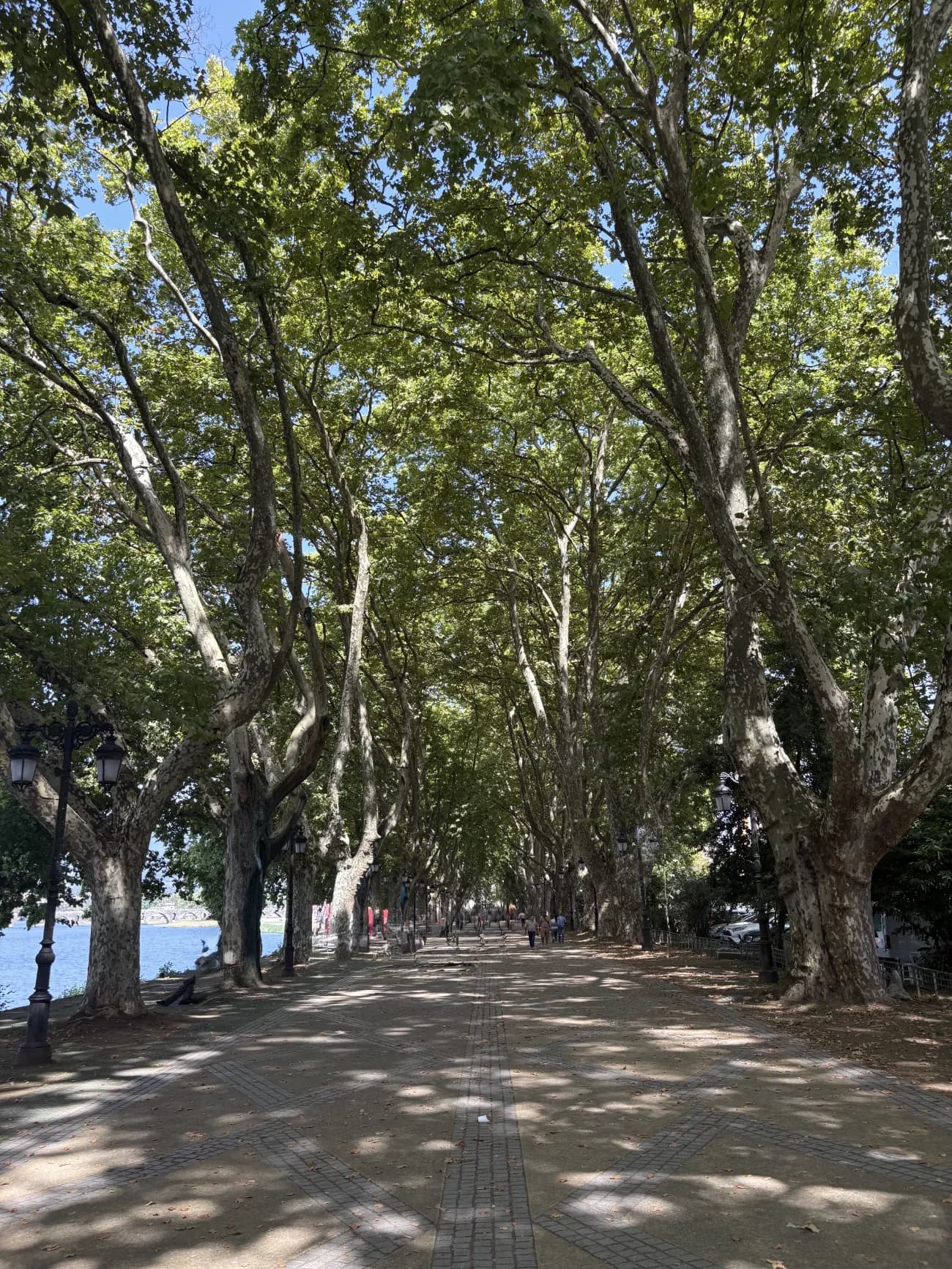
On the trail nobody knew my job, my history, or my reputation. The reason I came was the only introduction I needed. For centuries this path has recorded people moving through the hardest changes of their lives, and each step seems to turn a little of that into guidance and healing.
Everyone asks, and everyone answers.
So I began keeping a tally. With respect, and only when it felt right, I asked why, and I wrote down one sentence. The first four:
A man in his seventies had lost his wife of fifty-four years three months earlier.
A nineteen-year-old was about to start his first semester at university, leaving home for the first time.
A woman wanted to clear her head of a relationship by walking and breathing.
A father and son wanted more time together, because life gets busy.
A death, a departure, an ending, a father and a son running out of time. Four different reasons, all of them the same kind of thing: a life changing shape, and a person walking to meet the new one.
Rubiães
Rubiães ·
The climb before Rubiães is the steepest on this Camino, over the highest point of the route. At the top, people stop to remember. Some have carried something from their very first step for this moment: a rock, a photograph, a small thing that belonged to someone they loved. Near the peak stands a wooden cross for anyone who needs to let go of the weight they carry in sorrow, and the ground around it is heaped with what people have left.
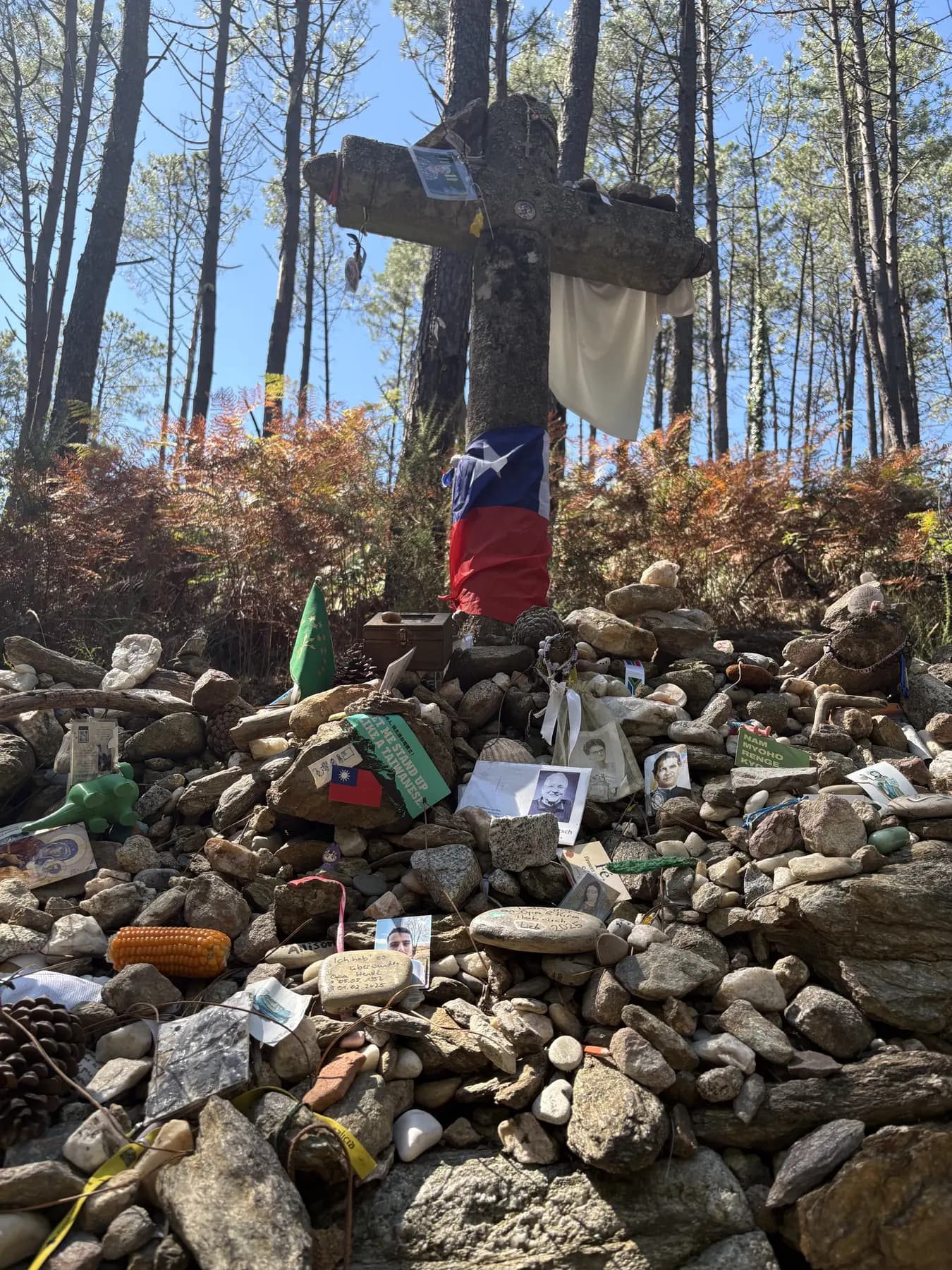
A stone carried a hundred kilometres uphill weighs more than a stone. Setting it down means something the body understands before the mind does. A walk for grief would not need to invent a ritual here. The Camino already has one, built by strangers over centuries, and nobody has to explain it.
Tui
Tui ·
Tui is the first town in Spain, across the Minho from Portugal. It is also just over a hundred kilometres from Santiago, the least a pilgrim can walk to earn the Compostela certificate, so many people begin here, and the trail changes: fresher legs, new faces, more of them. Here I met a man who has walked many Caminos over many years.
Everyone has the day they want to give up. It could be sore muscles, blisters, homesick, poor sleep, anything at all. If they can work through THAT day, the camino has something beautiful for them on the other side.
Redondela
Redondela ·
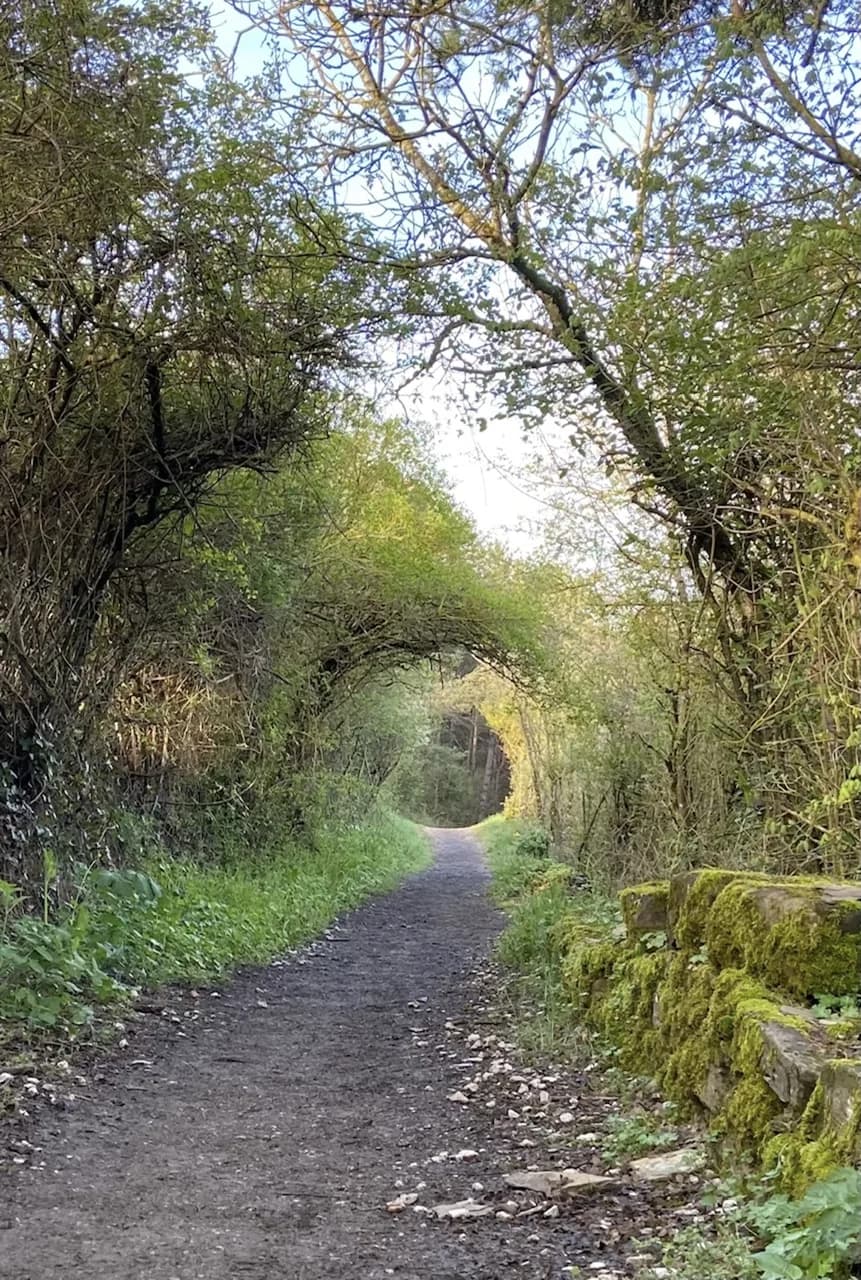
The trail into Redondela runs through a green tunnel of trees beside old mossy walls. Redondela is where the coastal route and the central route join, so the town is a meeting place of people who have come by different ways. I ate dinner in a public albergue with a woman in her mid-thirties who had every stamp put into two separate credentials. One was hers. The second belonged to her father, who had died three months before.
I am hiking with my dad everyday.
A stamp is proof that a person was there. She was making the walk his, one town at a time.
The tally kept growing.
A man had lost his estranged father a month before, after reaching his bedside and telling him, "I forgive you."
A recently engaged couple were sharing the Camino together.
A young woman had read about the Camino as a girl and always wanted to go. She handed in her master's thesis in August and was walking in September.
International Family
Arcade ·
By Arcade, I had found an international family. On the Camino, the human experience rises above cultural differences, religious beliefs and language barriers. We walked at different speeds all day and found each other again at night over the same tables. We were all sharing the same path in harmony.
Pontevedra and the Spiritual Variant
Pontevedra and Poio ·
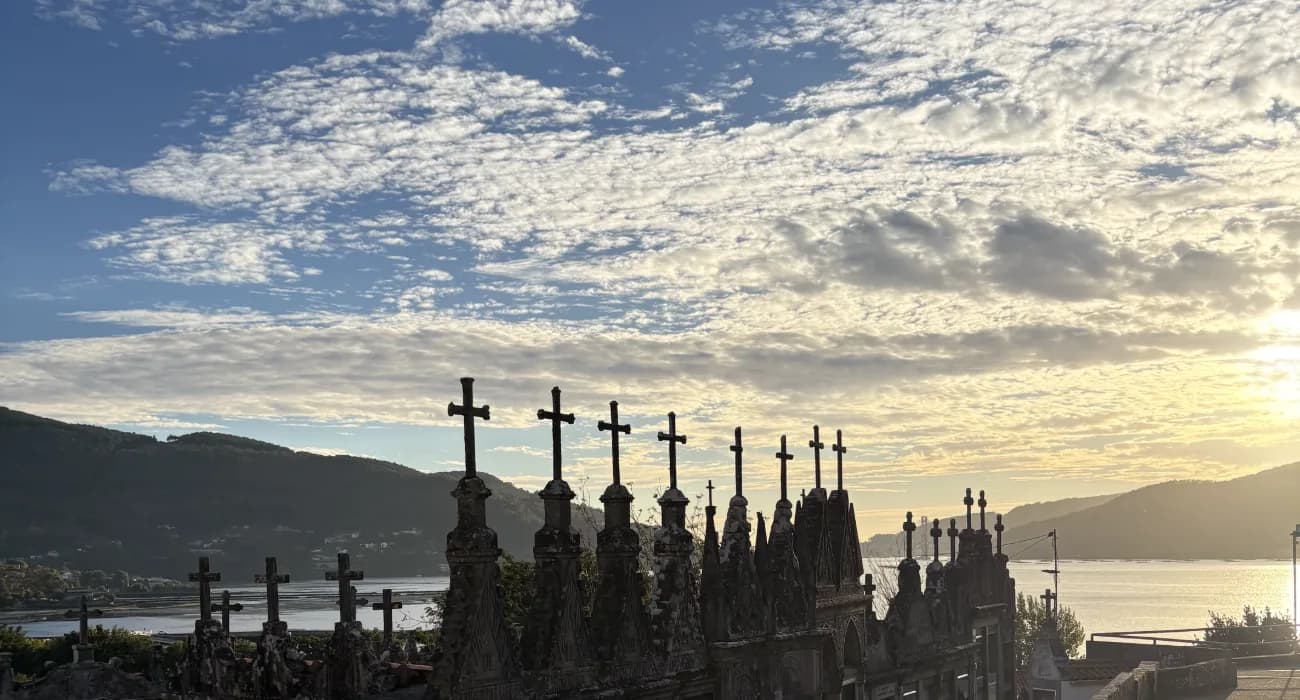
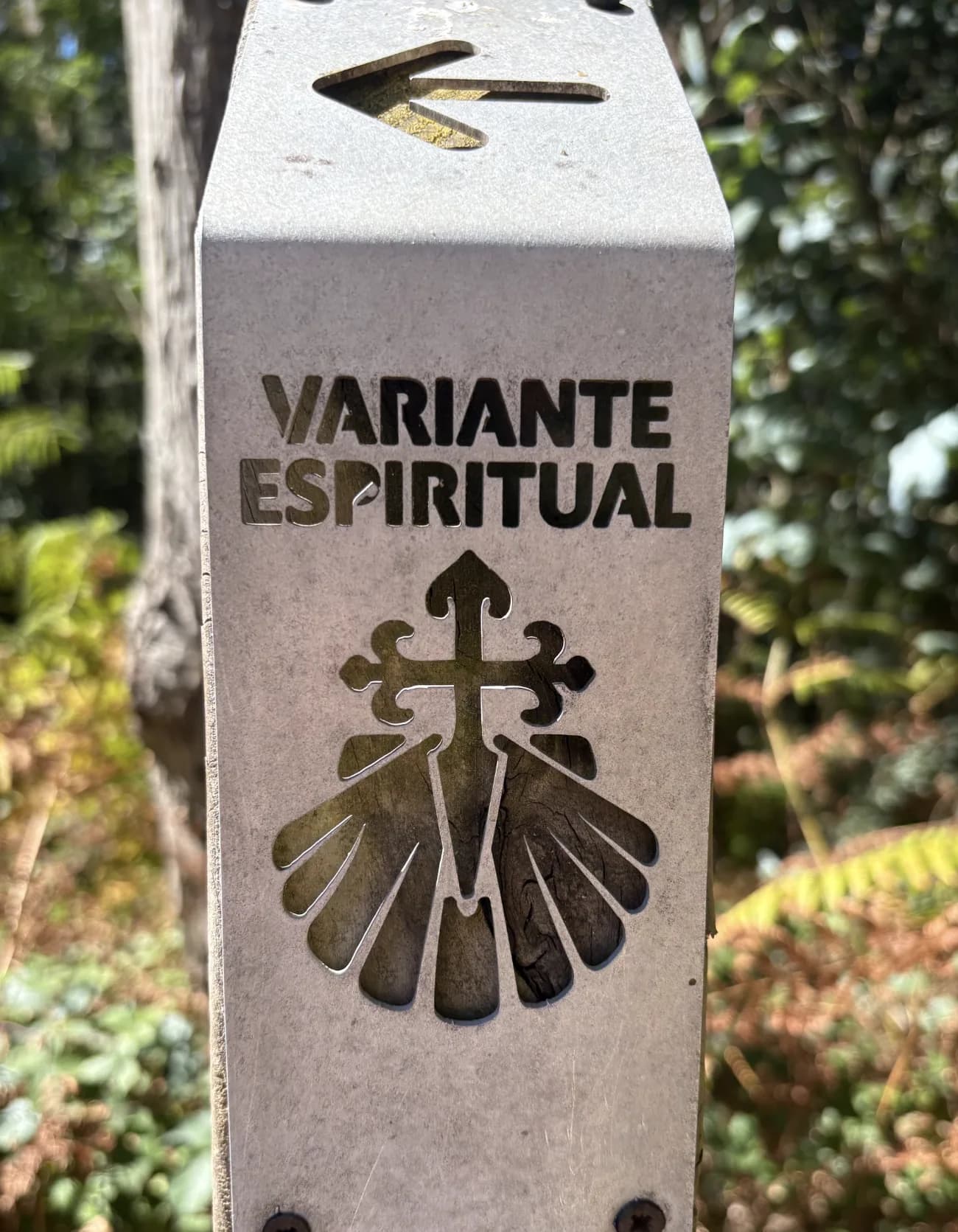
Pontevedra sits on the northwest coast of Spain in Galicia, where the culture holds to a deep Celtic tradition. Its pilgrim church, the Peregrina, is built in the shape of a scallop shell. Just past the city I left the Central Route for the Variante Espiritual, the Spiritual Variant. It retraces the Traslatio: in Jacobean tradition, the journey by water that carried the remains of the Apostle Saint James to Galicia. Whether someone arrives with faith, curiosity, exhaustion, or all three, the old story changes the rhythm of the last days.
Armenteira and the Stone and Water Route
Armenteira ·
At Armenteira, a Cistercian monastery in the hills, the trail makes room for quiet reflection. Pilgrims were finding direction and strength in the solitude. There are stretches of a long walk where conversation disappears on its own. Nobody has to announce a moment of reflection. It arrives when the noise finally runs out.
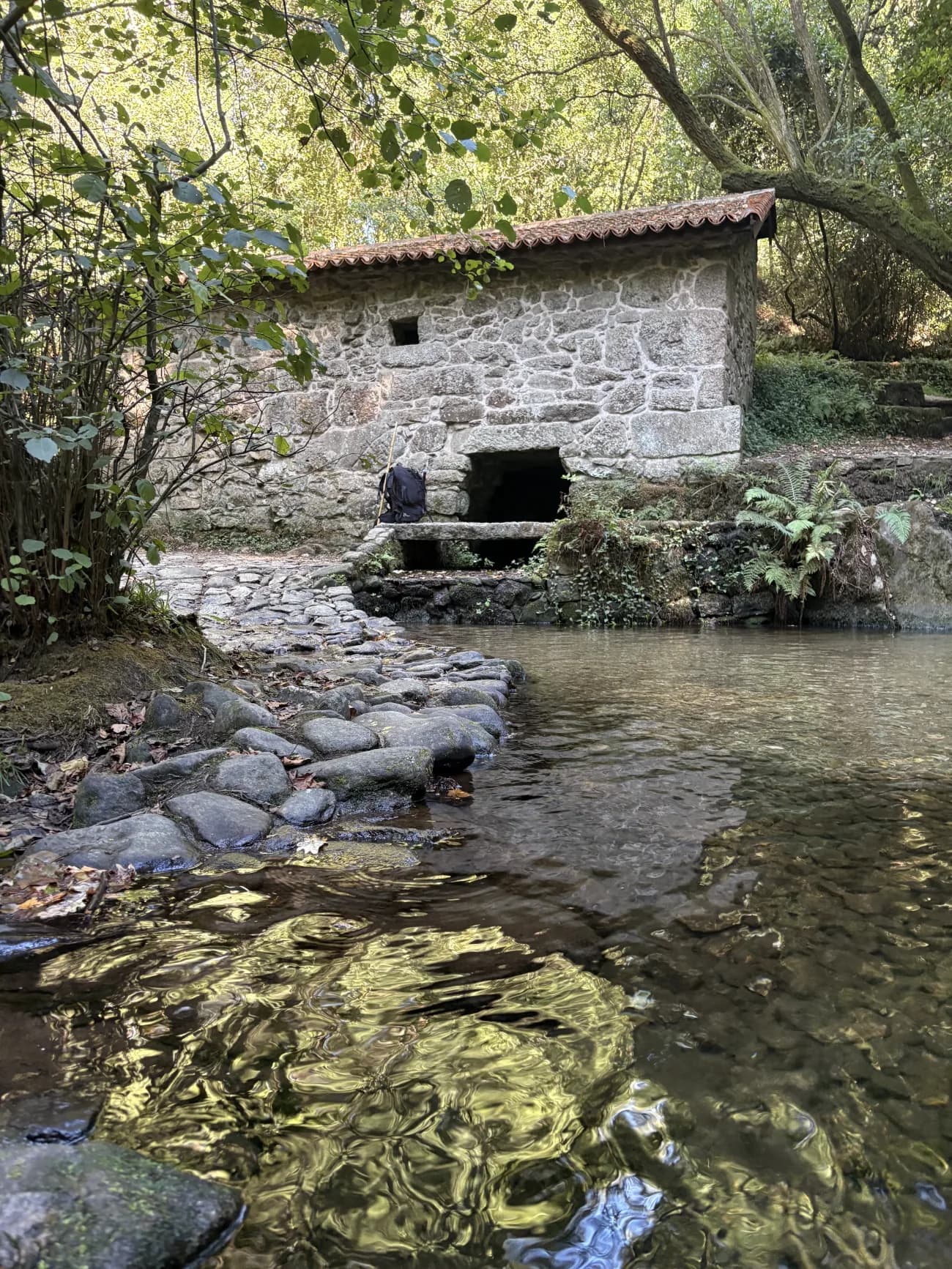
From the monastery the Ruta da Pedra e da Auga, the Stone and Water Route, follows the Armenteira River down through the trees. Ancient watermills rest on the banks, with small waterfalls and stone bridges between them. The mills were built to make the river work, and it has kept moving past them for centuries. The shade slowed me down, the water kept going beside me, and the walking began to feel less like getting somewhere and more like the reason I came.
The Ulla
Vilanova de Arousa and the Ulla ·
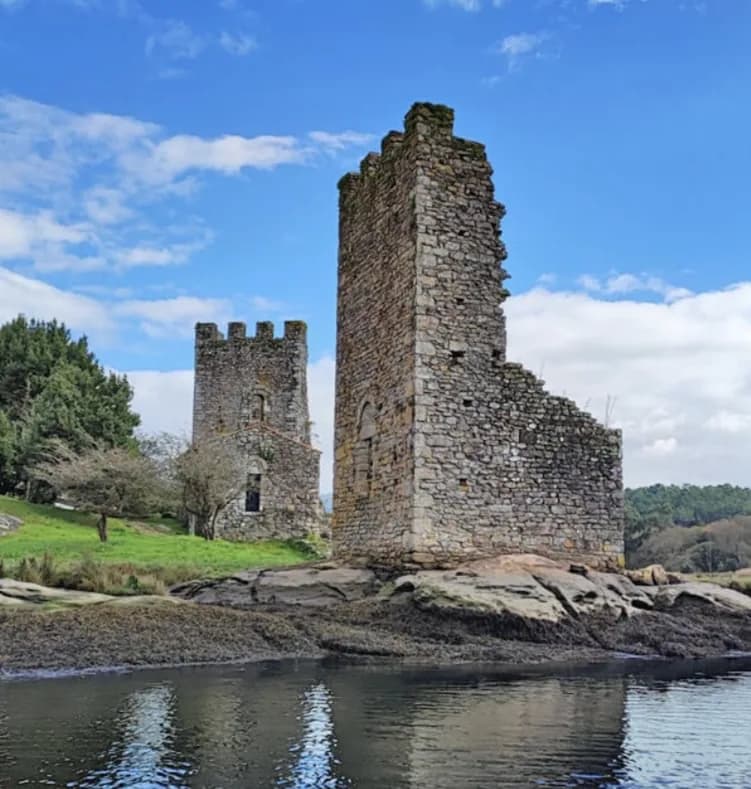
From Vilanova de Arousa the Variant goes by boat, up the Ría de Arousa and into the Ulla, the same water road the old story follows. On the river it was my turn. I shared my story in detail with a fellow pilgrim. Earlier in my life, I discovered I could listen to people in despair and support them. I studied to make it my career. However deep someone's pain, I could help them find hope. Trauma and grief became the way I served other people.
In my work I acknowledge the limits of psychology. In nature I see the deepest and most ancient paths to healing. This is my vision of the Grief Walk:
Be surrounded by all the natural beauty this world gives freely and a joyous love will return.
Padrón
Padrón ·
Padrón is where the Spiritual Variant rejoins the main route for the last push to Santiago, and where village life still holds out amid the sprawl. Its name comes from the pedrón, the stone where the boat carrying the remains of Saint James is said to have been tied before the final journey to his resting place.
A woman in her mid thirties told me about her "mixed feelings." She was excited that her journey was almost complete, grateful for the wonderful friends she had met and the buen camino spirit, and hesitant to leave the solitude the Camino had created in her mind.
My mind and work are constantly busy. Im always worrying and solving problems, real or imagined.
Her final words were a question: "Now my mind is quiet, how do I take it with me?" The quiet was made by walking, by days with nothing to solve except the next arrow. Nobody on the Camino could tell her how to carry it home. It may be the most useful question I brought back.
Santiago de Compostela
Santiago de Compostela ·
In the Praza do Obradoiro, in front of the cathedral, thousands of pilgrims arrive every day, and the celebration of completion lasts long into the evening. The credential that started almost empty in Porto is full.
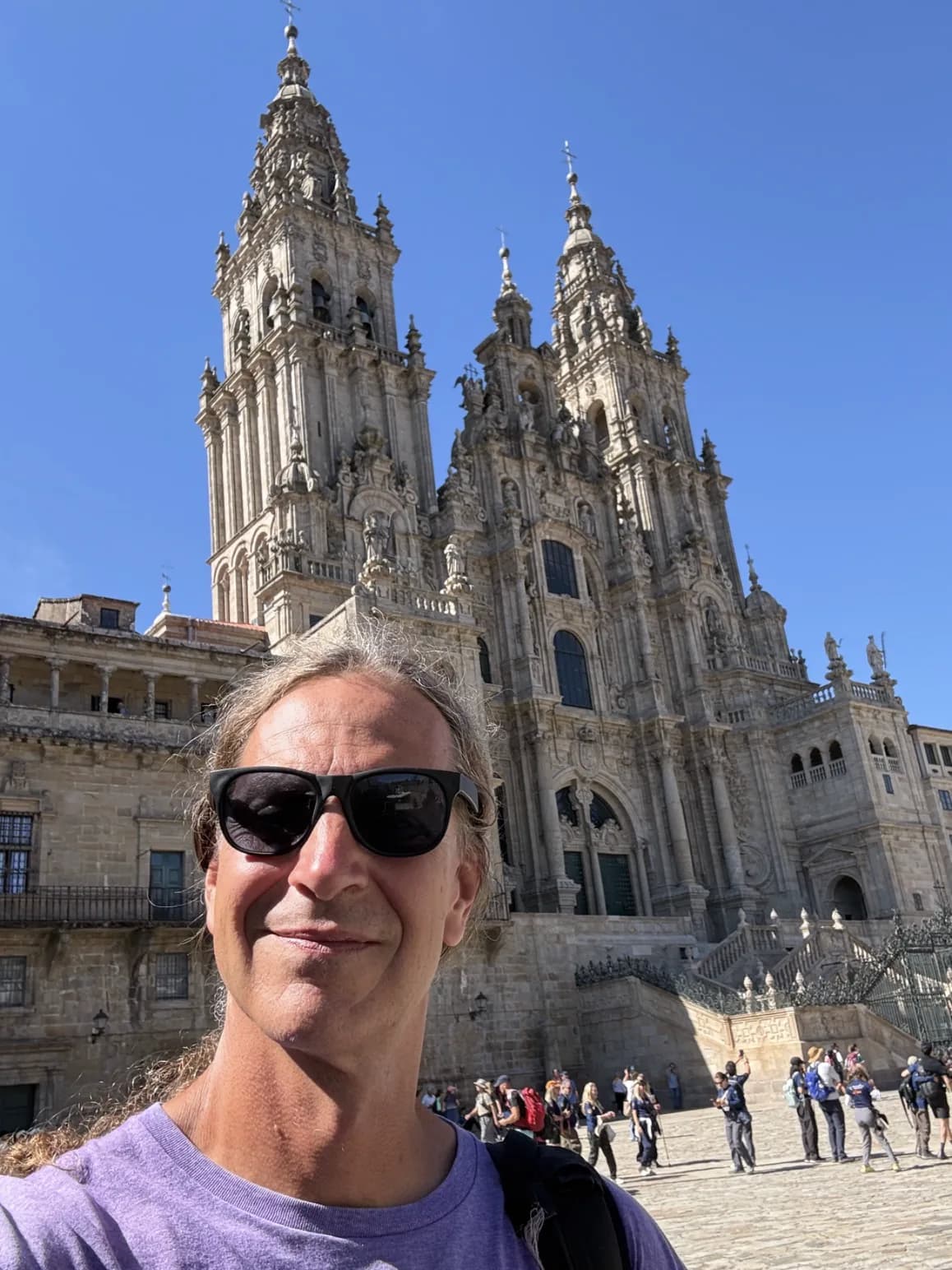
Faith is complete trust in something greater, without needing proof. The Camino offers no promise of good fortune or enlightenment. People have still been walking to this exact spot for a thousand years.
The Camino is still a pilgrimage, not an excursion, and I do not know yet how much of it any other journey can carry. It does seem that people go on adventures for transition rather than for a vacation. Almost everyone I met was carrying a transition: a death, a diagnosis survived, a career let go, a first semester, a marriage of fifty-four years, a father forgiven. The Camino does not fix any of it. It gives people days of walking, strangers who ask why, and a place to set something down. I found beauty in every story shared by every person who walked, slept, and ate along my side.
Mick wrote these notes on the trail between September 4 and 13, 2026, and sent them home as he walked. They were edited into one story for the Roam Alive Journal. Fellow pilgrims are not named.
Sources
- Wikipedia: Camino Portugués
- OpenStreetMap: Caminho Português de Santiago, the mapped central route
- OpenStreetMap: Camiño Portugués Variante Espiritual
- Rías Baixas tourism strategy: the Variante Espiritual from Pontevedra to Pontecesures, including the water stage from Vilanova de Arousa
- Rías Baixas tourism: Ruta da Pedra e da Auga (PR-G 170)
- Santiago de Compostela tourism: Praza do Obradoiro